House Democrats walk out of chamber over treatment
By World Capitol Bureau
4/10/2008 11:45 AMLast Modified: 4/10/2008 1:17 PM
From Wayne Greene's Blog: "We've reached the comic opera stage of the legislative session."
OKLAHOMA CITY - House Democrats walked out of the chamber Thursday morning, angry about their treatment in committee meetings where they have not been allowed to ask questions.
The protest follows Wednesday's refusal by Rep. Ron Peterson, R-Broken Arrow, to allow Democratic members to question why Peterson's committee would not allow parents to speak in a public meeting on an amendment to extend insurance coverage to children with autism.A week ago, Cherokee Chief Chad Smith also was not allowed to speak in a committee meeting where an "English-only" bill was being discussed.
Rep. Chuck Hoskin, head of the House Democratic caucus, said it was bad enough that members of the public were not allowed to speak, but elected representatives also are being denied the right to ask questions in committee and on the floor.Thursday morning, Rep. James Covey, D-Custer City, asked to be recognized on the House floor because he wanted to speak with House Speaker Chris Benge, R-Tulsa, about how committee meetings are being conducted. But he was not recognized."That was the straw that broke the camel's back," Rep. Eric Proctor, D-Tulsa.House Minority Leader Danny Morgan, D-Prague, huddled with Benge and others in the speaker's office. Morgan said Benge agreed to review committee rules and will have an answer on Monday.
Thursday, April 10, 2008


Democrats stage walkout - Oklahoman
Democrats stage brief walkout in protest, propose changes

The walkout lasted about two minutes. Democrats, however, later in the morning left the chamber again for a caucus meeting. They submitted several proposals to House Speaker Chris Benge, R-Tulsa. One suggestion was to require committee chairmen to be consistent in allowing members of the public and all committee members an opportunity to speak.
Democratic leader Danny Morgan said Benge said he would review the suggestions and make a decision Monday whether to submit them to the full House for a vote to amend House rules.
After Democrats returned from their caucus meeting, business was conducted with no further interruptions. The House adjourned for the week before noon. Morgan said House Democrats are angry over the refusal by Rep. Ron Peterson, R-Broken Arrow, to let supporters of a measure that would require insurance companies to cover costs associated with autism speak before his committee.
More than 30 supporters showed up the past two weeks to speak to Peterson's committee, but Peterson through procedural moves killed the measure and denied supporters to speak.
Last week Chad Smith, principal chief of the Cherokee Nation, was denied permission to speak before a House committee that took up a bill that would make English the official language of the state. The chairman of that committee, Rep. Guy Liebmann, R-Oklahoma City, restricted comments to House members. The measure passed out of committee and is awaiting action on the House floor.
Morgan, D-Prague, said House Democrats, who are outnumbered 57-44, also are upset over how some amendments are attached to bills or how some bills are gutted and replaced with language dealing with another issue. Amendments and committee substitutes to bills are supposed to have the same subject as the bill. Committee chairmen make the decisions on whether amendments and committee substitutes are appropriate, Morgan said. Their decisions cannot be challenged on the House floor, Morgan said.
Wednesday, April 9, 2008
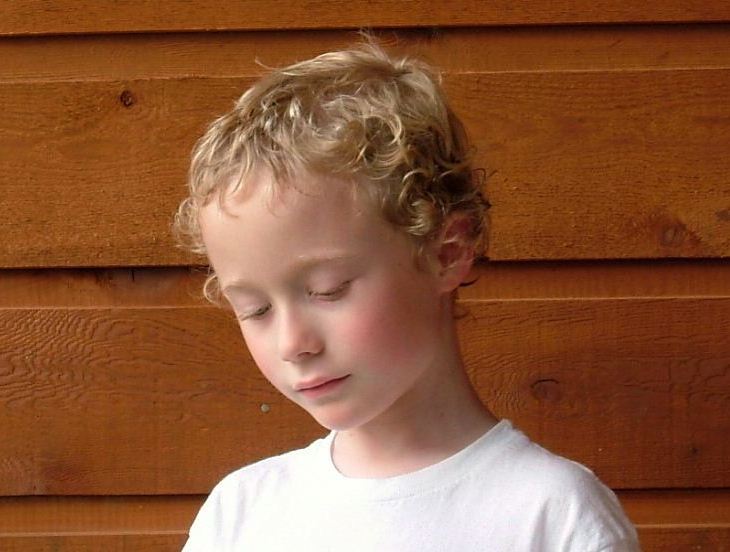
Edmond father pushing for autism help
An Edmond father who has spent the past two years trying to get health insurance for autistic children is leading another push today to get the proposal heard before a House committee.
"I knew the biggest hurdle we would always have would be Rep. Ron Peterson and his committee,” said Wayne Rohde, whose 10-year-old son, Nick, has autism. "That's the history of what he's done — he is the person that stops mandates.”
Rohde has appealed to parents to appear at this morning's meeting of the House Economic Development and Financial Services Committee.
An effort will be made to get language of the proposal, called "Nick's Law,” inserted as an amendment to Senate Bill 1059.
Peterson, the committee chairman, a week ago killed an amendment that would mandate insurance coverage for autism disorders.
Thursday is the deadline for Senate bills to pass out of House committees. Today is the last day Peterson's committee meets to take up Senate bills.
Peterson, R-Broken Arrow, said Monday he was still consulting with the speaker of the House over what to do. He did not return telephone calls Tuesday.
If the measure isn't heard in Peterson's committee, it's possible Nick's Law language could be attached as an amendment to an existing bill.
"The Republicans are clearly trying to kill the autism language where it doesn't get a fair hearing,” said Rep. Mike Shelton, D-Oklahoma City, a committee member who tried last week to get Nick's Law heard by Peterson.
Peterson has authored House Bill 3111, which would place restrictions on new health insurance mandates. It is intended to take a closer look at the cost of insurance mandates to reduce the price, which could offset price increases for policyholders.
Peterson said he's concerned that mandates increase the cost of insurance and make insurance less affordable. His measure did not get heard by a Senate committee. The Senate's deadline to hear House bills was last week.
Negotiations are continuing to keep his proposal alive.
Oklahoman Editorial April 8, 2008

At a premium: Mandate debate needs compromise
Many are relatives of victims of a disease or condition that would be addressed in a mandate. They are thus highly subjective participants in the debate.
On the other side is the principled opposition, one that we share, to mandates in general because of the effect mandates have on health insurance premiums. Supporters typically say a mandate will add only marginally to insurance costs, thereby negating the argument that mandates inordinately hurt the poorest and uninsured by making policies unaffordable.
Let's say that each mandate adds just 0.5 percent to the cost of insurance. With 40 mandates, that's a 20 percent increase. The point is, mandates must be considered as a whole.
Mandate supporters have found a demon in state Rep. Ron Peterson, R-Broken Arrow. A committee whose agenda he controls is cool to the latest mandate proposals. Peterson has ties to the insurance industry. Is he thus a highly subjective party to the debate?
Perhaps, but isn't that also true of lawyer legislators who routinely vote on tort reform bills and other legislation affecting their profession?
Compromise is possible in this debate, but it will take yielding from both sides. Peterson has a common-sense bill to subject proposed mandates to scrutiny before they become law. He believes, and we agree, that the financial and social impact of a proposed mandate should be studied before the mandate takes effect. Treatments that would be covered under the mandate would be vetted according to their efficacy.
Maybe if mandate supporters would work to enact Peterson's proposal, he would be more amenable to their ideas.
Tuesday, April 8, 2008
Senator Jay Paul Gumm's Statement
The State of Oklahoma
OFFICE OF SENATOR JAY PAUL GUMM
Atoka, Bryan, Coal, Johnston & Marshall Counties
April 8, 2008
FOR IMMEDIATE RELEASE
Contact: Senator Jay Paul Gumm
State Capitol: (405) 521-5586
Durant: (580) 924-2221
Mobile: (580) 920-6990
Senator Gumm’s “Senate Minute” Column for April 9-15, 2008
OKLAHOMA CITY - Hello again, everyobody! With half the session gone, the seeming inability for a number of issues to cross the partisan divide is troubling.
My bill requiring health insurance coverage for autism diagnosis and treatment and another called “Steffanie’s Law” – requiring insurance companies to continue covering patients participating in clinical trials – ran into partisan roadblocks in the House of Representatives.
In other states, both measures were enacted with bipartisan support. In the Oklahoma Senate – which is divided evenly between Democrats and Republicans – both bills enjoyed bipartisan support. Only when they arrive in the Republican-controlled House of Representatives do they fall victim to partisan politics.
Certainly, there are differences between the parties. Political campaigns are where those differences are and should be discussed. When campaign season is over, and it comes time to govern, the responsibility should shift away from winning elections and toward finding those areas of agreement on issues that affect us all.
Autism strikes Republicans and Democrats alike. Cancer strikes Democrats and Republicans alike. Partisanship should be checked at the door when we are discussing issues relating to health. Working to make Oklahoma a healthier state is in everyone’s best interest – Democrat, Republican and Independent.
On both the autism and clinical trial insurance bills, “no” is the only answer we have thus far received from the House committee chairman who is single handedly holding them up. He has never said to the media, “I am opposed to these bills, but here is another idea how to help these families.”
None of us who are fighting for these families is so inflexible that we would not look at another answer. “No,” however, is simply unacceptable – for whatever the reason. These bills both make sense; both will improve the quality of life for thousands of Oklahomans – and in some cases they might even save lives.
If we cannot help families facing the most difficult health issues of their lives, then I truly do not know why we are here. The phrase “family values” often gets tossed around in political discussions, but I do not know how anyone can talk about “family values” if they do not support issues that value families.
When it comes to standing up for the people of Oklahoma, I will always employ every legislative means at my disposal. While that tenacity has been criticized on the editorial pages of one of the major metropolitan newspapers, I see it as a fundamental part of being a lawmaker.
For me, the battle comes down to this: If we cannot enact policies to help families facing health challenges like autism or cancer, then we will have a difficult time enacting policies that help us all. This battle is about Oklahoma’s soul and Oklahoma’s families, and no partisan political interest should trump either.
Thanks again for reading the “Senate Minute,” have a great week and may God bless you all.
Monday, April 7, 2008
Tulsa World - It's Time
It's time:
Insurance should provide coverage for autism
Apr 07, 2008 (Tulsa World - McClatchy-Tribune Information Services via COMTEX)
Seven years ago Indiana passed a law requiring insurance companies to provide coverage for autism. Since then 17 states have passed similar legislation.
Last week, Arizona joined the list. Louisiana, Mississippi and Connecticut have bills under consideration. So does Oklahoma. Several weeks ago, "Nick's Law," named for 10-year-old Nick Rohde, an autistic child from Edmond, passed in the Senate. Now supporters are trying to get the bill out of a House committee. This is not an inconsequential matter.
The bio-neurological disorder occurs in one in 150 births and affects up to 1.5 million Americans. The cost of life-long care can be reduced by two-thirds with early diagnosis and intervention. In a decade the annual national care costs will be up to $200 billion.
The bill did not make it on the agenda of the House Economic Development Committee meeting Thursday. But parents of children affected by autism who had showed up to support "Nick's Law" did not leave and instead hung around to answer questions from lawmakers during breaks in the meeting and afterward.
Fortunately Nick's Law is appended to another bill set to come up
in the Economic Development Committee. Let's hope it can be heard and that committee members will have the courage to vote for it.
For the families of children with autism, the bio-neurological disorder is as real as heart disease, more prevalent than childhood cancer and often difficult to treat. Obtaining insurance coverage for psychological and neurological disorders has never been an easy sell in Oklahoma.
It took years for lawmakers to recognize that mental health treatment deserved coverage parity with other illnesses.
Our insurance industry is not heavily mandated. According to the Tulsa Autism Foundation the insurance industry's own policy group reports that autism insurance coverage would increase costs by less than 1 percent.
Mandates affecting the state insurance industry must be scrutinized carefully with an eye toward fairness. Why should autism be excluded? Lawmakers should seriously consider authorizing coverage for this devastating disorder, the fastest-growing developmental disability in the nationSunday, April 6, 2008
The Oklahoman's editorial on Nick's Law
In the Saturday, April 5, 2008 edition of The Daily Oklahoman, a brief editorial appeared criticizing Senator Jay Paul Gumm for his continued efforts to require autism diagnosis and treatment be covered by health insurance policies in Oklahoma. The editorial has drawn significant response in the "Comments" section of the newspaper's website at www.newsok.com (the direct link to the editorial is http://newsok.com/article/3225682/1207359531). The editorial and comments follow:
The stuff of mandates
There's more than one way to skin a cat, we were told before such a saying became uncomfortable in the age of animal rights sensitivity, and there's more than one way to get an autism coverage insurance mandate into state law. Actually, three ways — so far. State Sen. Jay Paul Gumm, D-Durant, is passionate about the autism mandate. When Gumm's bill requiring the mandate didn't make it out of a Senate committee, the bill's language was transferred to no fewer than three bills. One dealt with an insurance premium tax credit and another with a firefighter pension and retirement system. The third actually dealt directly with insurance coverage. As of Friday, it appeared none of the three was going anywhere. We've long been critics of coverage mandates, but if this is a good thing, let's do it in a bill about the mandate rather than stuffing it inside the skin of other bills.
Comments:
· 
Donna, Oklahoma City - Apr 5, 2008 9:44 PM
·
vicki, Guthrie - Apr 5, 2008 7:53 PM
·
Robyne, Edmond - Apr 5, 2008 2:24 PM
· ·
Laurie, Edmond - Apr 5, 2008 1:14 PM
·
Anne Marie, Oklahoma City - Apr 5, 2008 12:55 PM
·
Paul, Edmond - Apr 5, 2008 11:59 AM
·
Wayne Rohde, Edmond - Apr 5, 2008 8:45 AM
Subscribe to:
Posts (Atom)

 Posts
Posts


