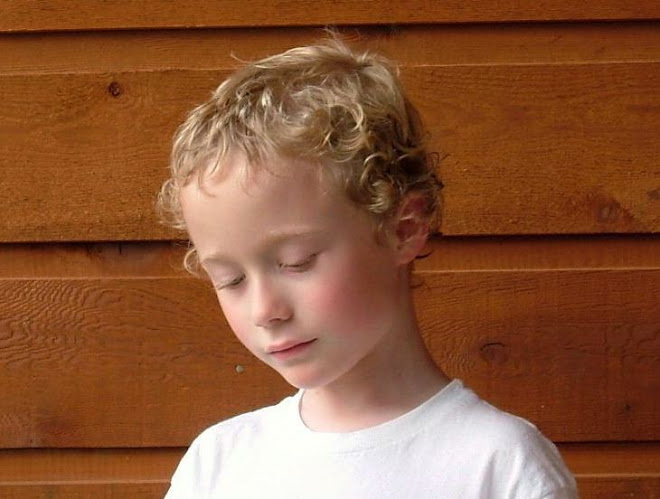
By John Greiner
Capitol Bureau
Mandating insurance coverage for autism would have little effect on insurance rates, according to a study released Tuesday by advocates for insurance coverage for children with autism.
The study by James N. Bouder, chief operating officer for a Pennsylvania school created to help children with autism, said rates would increase less than a half percent. The school is Vista School in Hershey, Pa.
The report was released by Sen. Jay Paul Gumm, author of "Nick's Law,” which would mandate coverage for autism. This is the latest effort by Gumm, D-Durant, and parents of autistic children to get the House to hear Senate Bill 1537.
Bouder estimated premiums will increase $1.66 per single member per month and $4.59 per family per month if SB 1537 is enacted.
Wayne Rohde of Edmond, whose son Nick is the namesake of Nick's Law, met earlier in the day with House Speaker Chris Benge, who has said Nick's Law will not be brought up this session.
To read more, click here.
Wednesday, May 14, 2008


Tuesday, May 6, 2008
Lawmaker blocks insurance mandate bills

Lawmaker blocks insurance mandate bills
May 5, 2008 11:43 PM CDT
Rep. Ron Peterson (R-Broken Arrow) has blocked legislation that would require health insurers to cover a variety of medical procedures.
Associated Press
OKLAHOMA CITY (AP) -- A state lawmaker who has blocked legislation that would require health insurers to cover a variety of medical procedures and conditions has accepted thousands of dollars in donations from individuals or political action committees with ties to the insurance industry, records show.
Rep. Ron Peterson, chairman of the House Economic Development and Financial Services Committee, has received a total of $64,600 in election campaign contributions since Jan. 1, 2007, according to records filed with the Oklahoma Ethics Commission. Of the total, $20,075 came from people or PACs with ties to the insurance industry.
Peterson, R-Broken Arrow, is the former owner of a property and casualty insurance agency and his wife is a part-time independent insurance agent. Peterson said the campaign contributions and his close ties to the industry have not influenced his position on insurance mandate legislation.
"They can say I'm the devil and I've been bought off. It's absolutely not true," Peterson said. Peterson said he opposes insurance mandates and believes they drive up the cost of health insurance, making it unaffordable for many Oklahomans.
Please click here to read the rest of the story.
House Leaders face political pressure on Nick's Law
Tue May 6, 2008
By Tim Talley
Associated Press Writer
Supporters of legislation that would require health insurance companies to cover the diagnosis and treatment of autism brought new political pressure Tuesday on Republican leaders in the Oklahoma House to schedule a hearing on the Senate-passed bill.
Sen. Jay Paul Gumm, who authored the measure known as "Nick's Law," urged GOP House Speaker Chris Benge of Tulsa to offer an alternative to the autism mandate if he is unwilling to allow House members to vote on it. The measure received bipartisan support in the Senate.
"You have given your answer to 'Nick's Law,' and it is 'No.' My question, Mr. Speaker, is: What is your solution?" Gumm states in a letter that was hand-delivered to Benge's office.
"We have placed ours on the table time and again only to be denied even a chance to present it in what is supposed to be 'The People's House'," said Gumm, D-Durant.
To read more, please click here.
Monday, May 5, 2008
Parent are Autism's Hidden Victims
SEATTLE POST-INTELLIGENCER
http://seattlepi.nwsource.com/local/361730_autism05.html
photo
Sharky McGarry, who has autism, is comforted by his mother Lillie McGarry after he became upset. Photographed in their Capitol Hill apartment in Seattle on Monday, April 21, 2008. (Dan DeLong / P-I)
Parents are autism's hidden victims
Baffling disorder hurts more than just those who have it
Last updated May 4, 2008 11:56 p.m. PT
By PAUL NYHAN
P-I REPORTER
Sharky Munat was 2 years old when the police came.
For 45 minutes the toddler's screams pierced the thin walls of his mother's two-bedroom apartment, until a neighbor finally called the cops.
His mother was used to screaming from her unusual child, who cried for hours if she simply laughed while watching television. But Lillie Addams felt sick when a police officer stopped them to check her son for bruises as they walked to the park.
The officer quickly realized there was no attack -- he was just one of "those kinds of kids" -- but his mother wouldn't know the kind was autistic for two more years.
"Check it out, buddy. If you keep it up, they are going to take you away," the one-time ballet dancer told her son once the officer let them go. Then she sat on a park bench and cried for an hour.
Children have autism, but parents are often invisible casualties. Their child's disorder ricochets through their lives, breaking up marriages, draining bank accounts and robbing them of sleep. University of Washington researchers found these parents, among all with disabled children, suffer the highest levels of depression and anxiety symptoms, and parenting stress.
Since Sharky was diagnosed, his mother has dealt with depression, chest-seizing anxiety attacks, insomnia and incessant guilt that she wasn't doing enough.
"It's this overwhelming sense of powerlessness," Addams said. "I feel blamed by society, by insurance companies. As if it was somehow our fault."
Seattle may be a leading center for autism research and treatment, but its therapists and the medical community can't handle the growing number of families dealing with the disorder. Today, as many as one in 150 children are diagnosed with autism, up from three to four out of 10,000 a decade ago.
More than a year after Sharky's diagnosis, the Addams family felt alone and stressed. Without a map for treatment, they, like other Seattle parents of autistic children, were stuck in a maze of therapies for a disorder with no cure.
There are few insurance plans that cover touted behavioral treatments and not enough therapists or slots at specialized schools. Parents can wait 18 months for services -- after doctors urge them to begin treatment quickly -- and pay tens of thousands of dollars a year out of their own pockets for therapy.
Over the past year and a half, Sharky's three parents -- Lillie, her ex-husband, Ted Munat, and her partner, Stormy Addams -- have visited a dozen doctors, therapists and classrooms, yet they still can't fill big gaps in their son's treatment. "Everywhere we have gone they are pushing you in different directions," Stormy Addams, 43, said. "Or they are pushing against you."
On a cool afternoon in April 2007 while many 4-year-olds play at nearby Miller Park, Sharky comes home from school and stays inside his Capitol Hill apartment, running across the wood floors like any kid his age, and talking about Spider-Man and Big Wheels.
But he runs across the same area again and again, his ponytail and hands flapping around him, uttering words often impossible to understand. By his third birthday, this engaging child had choked a baby and wanted to kill the family cat.
His behavior meant there were no raucous birthday parties, play dates or big dinners out for this family because Sharky could get overstimulated, lash out and throw tantrums that lasted for hours, or simply invite unwanted glares and advice from others parents.
"Our world has become very small," said Lillie Addams, a registered nurse at Group Health Inc.'s cardiac unit.
The Seattle P-I talked to families, therapists and researchers around Seattle dealing with autism who echoed her alienation, anxiety and lack of support.
The daily grind
Like an invasive weed, Sharky's autism permeated most daily routines for his first four years.
At dinnertime in June, Stormy Addams snatches Sharky's broiled salmon from their tiny oven, puts it in the freezer and then onto his Hello Kitty placemat, hoping to avoid a scene.
"Make it colder. Make it cold. Make it cold," Sharky begs again and again because if it's warm, he likely won't eat, he will shriek with the same terror as when his bath is too warm.
Then a bite of salmon falls onto Sharky's Spider-Man T-shirt and he begins swiping at it compulsively. When another morsel drops to the floor, he finally screams, and Lillie Addams ushers him to the first of four timeouts in his bedroom.
After two hours of this, dinner finally ends, and it's off to the bathroom, where one parent holds him down so he won't thrash while the other brushes his teeth. Even after the 4-year-old falls asleep in Stormy and Lillie's queen-size bed that night, he thrashes, eventually bloodying Lillie Addams' nose.
"Everything is all drama," Stormy Addams says.
Fast-forward 10 months, and Sharky has taken impressive strides. His sweet social nature now far outweighs more typical outbursts of 30 minutes or less.
But his speech and comprehension remain noticeably delayed, and his mother's worry is just as intense, though now focused on finding and paying for therapy and the right school.
That means Lillie Addams often sleeps in bursts of two to four hours. She tried Ambian, Lunesta and Trazodone, but those sleeping pills worked only for a few months.
"What I am not doing?" Lillie Addams, 39, asked.
Last fall the worry got so bad, she thought she was having a heart attack when her chest began tightening. It turned out to be anxiety attacks.
Chart of autism rates
Since autism remains such a mystery, parents battle this anxiety for years and constantly manage their expectations. When Sharky turned 4, Lillie Addams thought he would never go to college. Now she is not sure.
"Now I just hope he can lead an independent life, and have a girlfriend, or someone to love."
Her maternal hopes fluctuate because her son's autism is impossible to pigeonhole. With an infectious smile, he plays peacefully with his 5-year-old neighbor in the apartment courtyard one day and tells his father he loves him 20 times the next.
"Lots of friends of mine, their first comment is: 'What a happy child he seems to be,' " Munat said.
But Sharky always struggled to speak and understand. In the fall of 2006, a group of therapists, psychologists and nurses told them why, diagnosing him with autism, but not much else.
"It was kind of like this is what you got. See ya bye. We'll send you some paperwork," Lillie Addams said.
Since then, Addams has struggled to understand a disorder that's so hard to define that children are diagnosed on a spectrum. She still doesn't know where her son falls on that scale.
Meanwhile, treatment costs easily overwhelmed this family, which earns a combined $70,000 a year. They would love to get Sharky intensive behavioral therapy, for example, but they can't afford it.
"It's like having a carrot dangled in front of you," Addams said. "I make $30,000 a year, and often the cost of ABA (behavioral therapy) is $30,000."
Health insurance is little help. Few company plans cover behavioral therapies. After Sharky's two working parents cover co-payments for speech and occupational therapy there is little left for such promising therapies.
With little extra money, the three parents patched together Sharky's treatment plan over the last year, and worried his window to progress was closing because of what he missed. Sharky was diagnosed at age 4, later than many children with autism
The expense is one more layer of worry on an already complicated family. Lillie Addams and Munat divorced in 2002, and now split custody.
Yet this three-parent arrangement works, and Stormy Addams' role as stay-at-home mom and ad hoc therapist is clearest, etched in a tattoo of her cradling Sharky that runs down Lillie Addams' entire thigh.
Plans for the future
Autism is everywhere these days -- in People magazine, on Oprah, the presidential campaign trail and YouTube -- but none of this attention, or fresh state and federal money, has reached this family.
Instead, Lillie and Stormy Addams are so desperate that they may move to Colorado, California or Canada, anywhere that promises better support when Sharky's state benefits run out at age 7.
Amid their worry, Sharky makes progress. Over the last year, he learned to use the toilet, ride his Big Wheel, sleep in his own bed and brush his teeth.
To reduce their stress, the family now does yoga together every morning, and his mothers just resumed their only other stress reliever: going to the gym.
His meals and baths, though, are still served cold, and his mother still worries.
That's because Sharky will finish kindergarten this June at the UW's Experimental Education Unit. His parents wanted him to spend another year at the school because he lacks basic skills, such as writing his name, but he has to move on. They haven't been told where.
But Sharky has improved outside special schools and therapy sessions. A year ago, he slipped on his first pair of black ballet slippers.
Now every Thursday inside a North Seattle studio, Sharky glissades alongside his teacher and assumes a classic port de bras, his intense focus intermittently broken by a toothy grin.
"The more time I spend, the more hope I see," Lillie Addams said.
Saturday, May 3, 2008
Parents continue to fight for Nick's Law
Parents continue to fight for Nick’s Law
Posted: May 1, 2008 08:44 PM
By Amy Lester, NEWS 9
Parents are continuing their battle against health insurance companies to gain coverage for autistic children.
These parents of autistic children are fighting for Nick's Law, legislation that would force insurance companies to cover autism treatments. The bill has passed the state Senate four times and is now is now up for a vote in the House, where representatives are refusing to hear it.
"The concerns and the frustrations we have is we're not having the discussion in the House," Nick's father Wayne Rohde, said.
From one office to the next, parents of autistic children tried to drum up support and get Nick's Law voted on in the House. They went door-to-door, talking to representatives.
"You've had my support all along, wonderful. There wasn't any doubt about it," Jerry Shoemake, (D-District 16), said.
The parents attempted to hit up every representative, including House leadership. They had no luck with House Speaker Chris Benge, but Speaker Pro Tempore Gus Blackwell invited them into his chambers.
Blackwell said an intern is researching autism for him, and he's going through the bill.
"One of the things we have to look at and be able to address is that there are a lot of mandates out there. The more mandates we make, the more people cannot afford insurance," Blackwell said.
Parents of autistic children agree they cannot afford the hefty cost of treatment. Some pay as much as $5,000 a month for treatments, because insurance companies refuse to cover autism.
"We are desperate. Folks are desperate to get the care and treatment that they need for their children," parent Dee Blose said.
These families plan to make their voices heard every day until the House votes, but time is running out. The House has less than a month left in session.
Benge said the House will not hear Nick's Law this session. Some lawmakers insist the cost of health insurance would increase exponentially with the added coverage.
The families plan to continue applying public and political pressure until the legislation passes, even if that takes years.
Autism Families told 'not now' on measure - Tulsa World
Tulsa World.com
Autism families told 'not now' on measure
by: ANGEL RIGGS World Capitol Bureau
5/2/2008 12:00 AM
OKLAHOMA CITY -- A measure that would require insurance companies to cover autism-related medical costs is not expected to be heard in the House this session, despite pleas for its passage from parents of children affected by the disorder.
Several parents who came to the Capitol on Thursday called on House lawmakers to consider the measure known as "Nick's Law" this year, in an effort to stop insurance companies from "discriminating" against children with autism.
"The Senate has passed a version of Nick's Law four times," Wayne Rohde of Edmond said. "Yet the House is refusing to take action."
The measure is named for Rohde's son, Nick.
House Speaker Chris Benge, R-Tulsa, said Thursday afternoon that "at this point, we don't anticipate bringing the bill up."
He said he recognized that the measure is "very difficult and very emotional" but that mandating coverage would increase costs and make insurance less affordable.
However, many of the parents said the costs eventually would fall to taxpayers.
The "current estimate for future costs in Oklahoma -- if we don't do anything -- is roughly $500 million to $700 million per year," Rohde said.
"And this doesn't count the social and economic costs to the economy for productive parents dropping out of the work force, grandparents and parents liquidating their retirement accounts and having to become totally dependent on taxpayers for their retirement," he said.
Sen. Jay Paul Gumm, D-Durant, said in a prepared statement that House leaders know that the measure would pass on "a straight up or down vote."
"Many of us are committed to continuing this fight for thousands of Oklahoma children and their families," he said.
"One man cannot -- nor should not -- silence the voices of these families, these children and their duly elected representatives."
Last month, the parents crowded into a House committee meeting to express support for the measure, but no one was allowed to speak.
Angel Riggs (405) 528-2465
angel.riggs@tulsaworld.com
OK snubs vote on autism mandate
by: Associated Press
5/1/2008 12:00 AM
OKLAHOMA CITY -- House Speaker Chris Benge said Thursday he does not plan to schedule a vote on legislation that would require health insurers to cover autistic children, despite pleas from parents that the bill be heard.
Benge, R-Tulsa, said House Republican leaders did not plan to bring the bill up out of concern that the autism mandate would drive up the cost of health insurance policies and make it unaffordable for many Oklahomans. The measure received bipartisan support when it passed the Senate.
"It's not easy to say no to something like this," Benge told reporters after a news conference about a task force that will study growing health care costs and uninsured Oklahomans. The parents of autistic children attended the news conference.
"It's very difficult. It's very emotional," Benge said. But an analysis of the autism mandate indicates it would increase the cost of state employee health insurance by $6 million a year, Benge said. That does not include possible cost increases imposed by private health insurers, he added.
"When we mandate something like this, it increases the cost," the House speaker said. "We don't want to make health insurance unaffordable for Oklahomans."
Parents of autistic children characterized any cost increase as minute and vowed to step up public pressure for the House to give the bill a hearing before lawmakers adjourn at the end of May.
"To protect the insurance industry, we're totally ignoring the taxpayers," said Wayne Rohde of Edmond, whose 10-year-old son, Nick Rohde, suffers from autism. The autism mandate bill originally passed by the Senate was dubbed "Nickµs Law."
Rohde said House GOP leaders do not understand that refusing to require health insurers to cover the diagnosis and treatment of autistic children places the burden of caring for them on taxpayers.
"It's totally irresponsible to put all the pressure on the taxpayers and on the school districts for care," Rohde said.
The Senate author of Nick's Law, Sen. Jay Paul Gumm, D-Durant, accused Benge and House Republican leaders of "turning their back on Oklahoma's autistic children and their families."
"They deserve a vote on the floor of the House of Representatives," Gumm said. "One man cannot, nor should not, silence the voices of these families, these children and their duly elected representatives.
"Many of us are committed to continuing this fight for thousands of Oklahoma children and their families."
To read more of the article, click here
Subscribe to:
Posts (Atom)

 Posts


