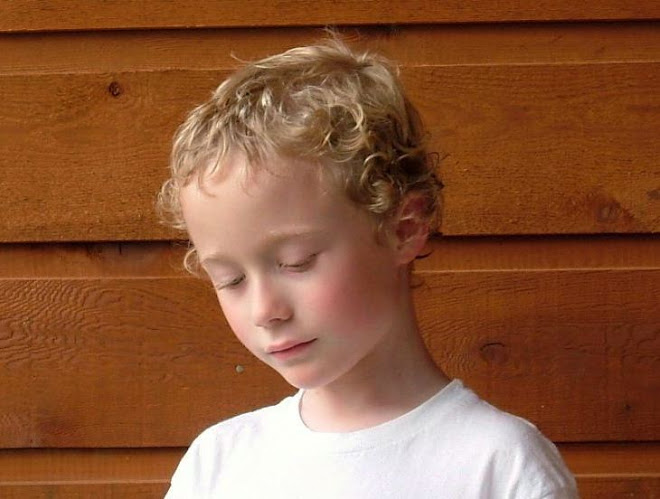
Just a reminder that on Monday, Sept 15th, 2008 6pm there will be another in a series of Nick's Law educational seminars for parents, caregivers, and concern citizens in the Shawnee area.
The seminar, conducted at the Shawnee City Library, will be hosted by Wayne Rohde, father of Nicholas, an autistic 10 year old. Local officials and state representatives of that area have been invited to attend.
The seminar is a continuing series of meetings to provide education and to rally the autism community on securing passage of Nick's Law in the upcoming legislation session that starts Feb 2009.
The seminar will move to the greater Tulsa area in the next couple of weeks.
Sunday, September 14, 2008


Myths of insurance mandates

By State Sen. Jay Paul Gumm
The Oklahoman, Saturday, Sept 13, 2008
President Kennedy said, "The great enemy of the truth is very often not the lie — deliberate, contrived and dishonest — but the myth, persistent, persuasive and unrealistic. Belief in myths allows the comfort of opinion without the discomfort of thought.”
As we fought for health insurance coverage of children with autism, we fought a "persistent, persuasive and unrealistic” myth. The constant refrain from those who oppose helping these families is their opinion insurance mandates like "Nick's Law” raise premiums and increase the number of people who are uninsured.
The insurance situation in other states unravels the arguments on which the opponents of "Nick's Law” depend. First, compare the number of legislative mandates among several states. Then, in those states with more legislative mandates, one should look at the percentage of uninsured. Finally, one should examine premium costs in those states compared with Oklahoma.
We have 36 health insurance mandates in Oklahoma; 20 states have fewer and 29 states have more. For their myth to be accurate, every state with more health insurance mandates should have higher premium costs and more uninsured. Here is where their myth begins to unravel.
Four states that have more mandates have lower average premiums: Missouri, Tennessee, Virginia and Washington. Also, the percentage of uninsured is smaller than Oklahoma in each of those states.
Oklahoma has almost 19 percent of our residents without health insurance. In Missouri, the rate of uninsured is 12.3 percent; in Washington, 12.5 percent; in Virginia, 13.2 percent of its residents are uninsured; and, in Tennessee, the number is 13.4 percent.
The number of uninsured in individual states has more to do with per capita personal income and the cost of living than legislative requirements that health insurance cover specific illnesses. Even that statement has exceptions.
In California, one of the most expensive states in which to live, health insurance is cheaper than in Oklahoma. On top of that, California has 14 more legislative health insurance mandates than Oklahoma does.
This myth has only one purpose: Allow some to turn their backs on autistic children "without the discomfort of thought.” During the 2008 session of the Legislature, the myth allowed a small number of Republican leaders in the House of Representatives to deny a hearing on "Nick's Law” without the discomfort of a real debate.
The reason is twofold. First, they know their argument will never hold up under real scrutiny, so they put up this smokescreen to provide political cover. Second, they know a majority of House members — Republicans and Democrats alike — will vote to pass "Nick's Law” if given a chance, just like what happened in the evenly divided Oklahoma Senate.
The real tragedy of House leaders' stall tactics is the continued unimaginable financial strain on families with autistic children. "Nick's Law” will help, if House leaders will only give the measure a hearing. This is a chance for them to do more than talk about "family values.” It is a chance for them to truly value families.
Gumm, D-Durant, represents District 6 in the Oklahoma Senate.
Friday, August 22, 2008
UCO Masters Degree To Prepare Students To Specialize In Helping Autistic Children

Media Advisory: UCO Masters Degree To Prepare Students To Specialize In Helping Autistic Children
Aug. 19, 2008
Contact: Adrienne Nobles, Director of Communications and Marketing, University of Central Oklahoma, (405) 974-2103, anobles@ucok.edu
MEDIA ADVISORY: NEW UCO MASTERS DEGREE FIRST IN STATE TO PREPARE STUDENTS TO SPECIALIZE IN HELPING AUTISTIC CHILDREN
WHEN: 4:30 p.m., Wednesday, Aug. 20
WHERE: UCO Education Building, Room 204
WHAT: Beginning this fall semester, UCO will offer Oklahoma's first master's degree to prepare students to become nationally Board Certified Behavior Analysts who specialize in autism.
Before the first class in the new program begins on Aug. 20, UCO officials will join with State Senator Clark Jolley and State Representative Marion Cooksey and representatives from the Oklahoma Autism Coalition to celebrate this advancement in higher education and the treatment of autism.
The development of this program is in response to an initiative by the Oklahoma State Legislature to create a training system in the state to meet the needs of the growing number of autistic children. It is estimated that one in 150 children in the United States will be diagnosed with autism.
Headed by Dr. Mary Sweet-Darter, UCO psychology professor, the specialized degree consists of six courses and will take two years to complete. Twenty-eight students are registered for the new program.
UCO is uniquely positioned to provide this training, given its roots as a teaching college and its College of Education and Professional Studies' emphasis on improving PK-12 education and long-standing history of specialty training in it's nationally-accredited Department of Psychology.
Autism is a complex developmental disability that typically appears during the first three years of life and affects a person's ability to communicate and interact with others. It is defined by a certain set of behaviors and is a "spectrum disorder" that affects individuals differently and to varying degrees. There is no known single cause for autism.
INTERVIEW OPPORTUNITIES:
UCO Administrative Officials
Program Faculty
State Senator Clark Jolley
State Representative Marion Cooksey
Representatives from Oklahoma Autism Coalition
Media Contacts
Adrienne Nobles (405) 974-2103
Thursday, June 19, 2008
Journal Record Pitts: Mandated health insurance coverage needs study
JournalRecord
Opinion
Pitts: Mandated health insurance coverage needs study
June 9, 2008
Interim studies, particularly in election years, often are proposed for legislative measures to avoid a potentially unpopular but objectively justifiable vote on a specific bill or issue.
Such was likely the case for state Sen. Jay Paul Gumm’s bill to mandate health insurance coverage for the diagnosis and treatment of autism. His Senate Bill 1537 died in the Economic Development and Financial Services Committee of the Oklahoma House of Representatives when the chairman, state Rep. Ron Peterson, R-Broken Arrow, refused to hear it.
Last-minute efforts in the closing days of the legislative session to force consideration of the bill failed but an interim study to determine its cost to health insurance ratepayers was approved by Speaker of the House Chris Benge, R-Tulsa, who reportedly said parents of autistic children will be included.
Without question the issue is an anecdotally emotional one for those who must deal with the heart-wrenching and costly care of an autistic child. It also makes for insurance-company-bashing quotes on the six o’clock TV “soap” news.
It is virtually impossible to visit with even the most reasonable and cogent parent of such a child for even a few minutes without realizing and sympathizing with the mental, emotional and financial stress they endure. Unfortunately this poignancy often blurs objectivity in considering the real effect of such legislation.
Gumm’s bill is part of a national movement to get states to mandate health insurance coverage for autistic children. Conflicting studies have been cited regarding increased health insurance costs to ratepayers and in some cases such as Oklahoma the same study is being used by Gumm and Peterson to prove such a law will or will not result in higher health insurance rates.
The study was done by James Bouder of the Vista Foundation, a Pennsylvania-based autism advocacy group. The senator says it shows passage of his bill “would not spike insurance costs and ultimately would save taxpayers millions.” He added it shows the cost would be less than one-half penny for every dollar in premium costs.
“Such a negligible cost would not drive up the number of uninsured Oklahomans while providing needed benefits to families struggling to care for their autistic children.” Gumm said.
Not so, Peterson insists.
“If all of the 1,894 (about 30 percent of the 6,289 estimated by the federal Center for Disease Control and Prevention) autistic children covered by mandate policies received the full $75,000 in annual benefits the Bouder study acknowledges are possible under SB 1537, Oklahomans could pay an additional $142 million per year for insurance. That translates into a 5.22-percent increase in rates.”
That could seriously affect individual rate payers’ health insurance and employers’ ability to provide group health insurance. To be sure, whatever the cost is, it will not be borne by the insurance companies.
Even the Bouder study acknowledges that “100 percent of likely, increased costs attributable to services provided under SB 1537 will be passed on to private insurance ratepayers.”
Democrats are attempting to make the bill a partisan election issue, blaming House Republican leaders for refusing to hear the bill in committee while claiming many Republican members supported the measure, a curious and unproven claim but a typical political approach.
Both parties are good at blocking legislation in committee. In the Senate, Democrats prevented a committee hearing on Peterson’s bill to require actuarial studies of all proposed mandated health insurance coverages before they could be enacted.
The Bouder study and the different resulting claims about it demonstrate that an objective and independent actuarial examination of the costs to Oklahoma ratepayers is the right path to follow. Passing legislation with such potential impact on Oklahoma’s health insured in the heat of emotional demonstrations and protests would have been unwise.
While the economic impact of such legislation on Oklahomans with or needing health insurance is of vital importance, legislators should not overlook the possible social and long-term costs of failure to treat autistic children.
William O. Pitts may be reached by phone at (405) 278-2880 or by e-mailing bill.pitts@journalrecord.com.
Opinion
Pitts: Mandated health insurance coverage needs study
June 9, 2008
Interim studies, particularly in election years, often are proposed for legislative measures to avoid a potentially unpopular but objectively justifiable vote on a specific bill or issue.
Such was likely the case for state Sen. Jay Paul Gumm’s bill to mandate health insurance coverage for the diagnosis and treatment of autism. His Senate Bill 1537 died in the Economic Development and Financial Services Committee of the Oklahoma House of Representatives when the chairman, state Rep. Ron Peterson, R-Broken Arrow, refused to hear it.
Last-minute efforts in the closing days of the legislative session to force consideration of the bill failed but an interim study to determine its cost to health insurance ratepayers was approved by Speaker of the House Chris Benge, R-Tulsa, who reportedly said parents of autistic children will be included.
Without question the issue is an anecdotally emotional one for those who must deal with the heart-wrenching and costly care of an autistic child. It also makes for insurance-company-bashing quotes on the six o’clock TV “soap” news.
It is virtually impossible to visit with even the most reasonable and cogent parent of such a child for even a few minutes without realizing and sympathizing with the mental, emotional and financial stress they endure. Unfortunately this poignancy often blurs objectivity in considering the real effect of such legislation.
Gumm’s bill is part of a national movement to get states to mandate health insurance coverage for autistic children. Conflicting studies have been cited regarding increased health insurance costs to ratepayers and in some cases such as Oklahoma the same study is being used by Gumm and Peterson to prove such a law will or will not result in higher health insurance rates.
The study was done by James Bouder of the Vista Foundation, a Pennsylvania-based autism advocacy group. The senator says it shows passage of his bill “would not spike insurance costs and ultimately would save taxpayers millions.” He added it shows the cost would be less than one-half penny for every dollar in premium costs.
“Such a negligible cost would not drive up the number of uninsured Oklahomans while providing needed benefits to families struggling to care for their autistic children.” Gumm said.
Not so, Peterson insists.
“If all of the 1,894 (about 30 percent of the 6,289 estimated by the federal Center for Disease Control and Prevention) autistic children covered by mandate policies received the full $75,000 in annual benefits the Bouder study acknowledges are possible under SB 1537, Oklahomans could pay an additional $142 million per year for insurance. That translates into a 5.22-percent increase in rates.”
That could seriously affect individual rate payers’ health insurance and employers’ ability to provide group health insurance. To be sure, whatever the cost is, it will not be borne by the insurance companies.
Even the Bouder study acknowledges that “100 percent of likely, increased costs attributable to services provided under SB 1537 will be passed on to private insurance ratepayers.”
Democrats are attempting to make the bill a partisan election issue, blaming House Republican leaders for refusing to hear the bill in committee while claiming many Republican members supported the measure, a curious and unproven claim but a typical political approach.
Both parties are good at blocking legislation in committee. In the Senate, Democrats prevented a committee hearing on Peterson’s bill to require actuarial studies of all proposed mandated health insurance coverages before they could be enacted.
The Bouder study and the different resulting claims about it demonstrate that an objective and independent actuarial examination of the costs to Oklahoma ratepayers is the right path to follow. Passing legislation with such potential impact on Oklahoma’s health insured in the heat of emotional demonstrations and protests would have been unwise.
While the economic impact of such legislation on Oklahomans with or needing health insurance is of vital importance, legislators should not overlook the possible social and long-term costs of failure to treat autistic children.
William O. Pitts may be reached by phone at (405) 278-2880 or by e-mailing bill.pitts@journalrecord.com.
Friday, June 13, 2008
Autism Insurance Push Makes National News

The State of Oklahoma
OFFICE OF SENATOR JAY PAUL GUMM
Atoka, Bryan, Coal, Johnston & Marshall Counties
June 13, 2008
FOR IMMEDIATE RELEASE
Contact: Senator Jay Paul Gumm
State Capitol: (405) 521-5586
Durant: (580) 924-2221
Mobile: (580) 920-6990
Autism Insurance Push Makes National News
Pressure Will Continue to Build in Oklahoma As Well, Gumm Says
OKLAHOMA CITY – A national news program this week highlighted the growing epidemic of children with autism and the push by parents to force health insurance to cover diagnosis and treatment of the disorder.
NBC’s “The Today Show” aired a segment Thursday (June 12) as part of a continuing series of reports on autism. The story featured parents who are encouraging state legislatures across the nation to pass laws requiring coverage of autism diagnosis and treatment.
One of the most closely watched battles of the recently concluded 2008 session of the Oklahoma Legislature was the effort to pass an autism insurance bill. Written by Senator Jay Paul Gumm, the bill – known as “Nick’s Law” – passed the Senate on four separate occasions, each time on bipartisan votes.
When the proposal arrived in the House of Representatives, it was killed each time when Republican leaders – led by Speaker Chris Benge – refused to even allow the bill to be heard.
“If the Speaker thought that getting out of session would ease the pressure on him and his cabal to do the right thing, he made a serious miscalculation,” said Gumm, a Democrat from Durant. “This is a national battle. People are watching, and they expect a fair debate.”
The “Today Show” segment included a statement on the issue by the special interest group representing insurance companies. Gumm said the statement is a “slick attempt” by big insurance to have it both ways.
The insurance lobby conceded in the statement that “medically related care should be covered by insurers.” The problem is, Gumm said, once “medically related care” is coded as “autism,” insurance companies refuse to pay claims.
Then, the lawmaker said, the special interest group unveils its real agenda with the following statement: “For those who need assistance, we should be committing public resources to help fund cost-effective programs to care for those who are diagnosed with autism.”
“The phrase ‘public resources’ is a fancy way of saying ‘taxpayer dollars’,” he said. “Their real agenda is to pass the cost of covering autism on to the taxpayers. That way, insurance companies protect both their robust profits and their ability to fund the political campaigns of politicians who protect them.”
Gumm said the “Today Show” segment makes a fair case in favor of requiring insurers to cover autism diagnosis and treatment. “The segment gives both sides a chance to make their case, and clearly the momentum to pass bills like Nick’s Law is building,” he said.
“Even in deeply ‘red’ Republican states, lawmakers and governors of both parties are putting aside the special interests for the public interest. It’s too bad House leaders could not find it in their hearts or heads to do the same.”
Not every House Republican supported their leadership on the issue; four Republican House members signed a “discharge petition” that would have forced a vote on “Nick’s Law.” Then, before they got the required number of signatures, Gumm said House Republican leaders began enforcing party discipline.
“It’s pretty clear they dropped the hammer, preventing members from doing what their conscience told them was the right thing,” he said. “However, political power in Oklahoma rests with the people not the politicians, and I believe Oklahomans will rise up and force House leadership to get on this train or get run over by it.”
Gumm said he believes when the Oklahoma Legislature returns in February the case to pass Nick’s Law will be greater than ever. “The parents are not going away, and these children are not going away,” he concluded.
“To do nothing – a course of action with which House leadership is content – will condemn children who might be saved by diagnosis and treatment. This is just one case where the values of House leadership are woefully out of step with the people they were truly elected to serve.”
Thursday, June 12, 2008
Easter Seals Oklahoma to help autistic children
Easter Seals to help autistic children
by: AP Wire Services
6/11/2008 12:00 AM
OKLAHOMA CITY (AP) — A group that helps people with disabilities and special needs will offer therapeutic programs to help treat the symptoms of autism in young children.
Easter Seals of Oklahoma plans to open the Easter Seals Autism Therapeutic School in Oklahoma City after Labor Day, Programs Director Wayne Rohde said. Eventually, the group would like to expand the program to Tulsa and other cities.
"This is going to be geared toward the kids prior to grade-school age," Rohde said.
A bill that would have required insurance companies to cover autism therapies, called Nick's Law, was named after Rohde's son. The measure didn't get a hearing in the Oklahoma House.
"We can actually help these kids lose many of the symptoms of autism," Rohde said.
Children ages 2 to 5 who are eligible for the first day-care class of 10 to 12 will be chosen by lottery.
Keith Geary, founder of Aaron's Bridge, an advocacy group named for his 7-year-old autistic son, said many Oklahomans send their children out of state to autism specialists.
Geary is hoping that this program can change that.
"It seems to be natural for them," he said of Easter Seals offering the service. "We just want to see all the kids in Oklahoma get the chance to get better."
The full-day program will feature therapeutic services and interaction with children without autism who attend an onsite day care.
Children who are chosen must be physically healthy before they can benefit from therapy, Geary said.
Participants in the therapeutic program will be assessed to determine their needs, and parents must agree to work with their children at home and will be trained to do so.
"You just don't drop your child off for eight hours," Rohde said. "When you're dealing with autism, it's 24/7."
The program will either be free or have a minimal charge, Rohde said.
Money to pay for the program comes from donors and grants.
Aaron's Bridge will hold a fundraiser, "A Night in Casablanca: A Blast from the Past," on June 27 at the National Cowboy & Western Heritage Museum.
by: AP Wire Services
6/11/2008 12:00 AM
OKLAHOMA CITY (AP) — A group that helps people with disabilities and special needs will offer therapeutic programs to help treat the symptoms of autism in young children.
Easter Seals of Oklahoma plans to open the Easter Seals Autism Therapeutic School in Oklahoma City after Labor Day, Programs Director Wayne Rohde said. Eventually, the group would like to expand the program to Tulsa and other cities.
"This is going to be geared toward the kids prior to grade-school age," Rohde said.
A bill that would have required insurance companies to cover autism therapies, called Nick's Law, was named after Rohde's son. The measure didn't get a hearing in the Oklahoma House.
"We can actually help these kids lose many of the symptoms of autism," Rohde said.
Children ages 2 to 5 who are eligible for the first day-care class of 10 to 12 will be chosen by lottery.
Keith Geary, founder of Aaron's Bridge, an advocacy group named for his 7-year-old autistic son, said many Oklahomans send their children out of state to autism specialists.
Geary is hoping that this program can change that.
"It seems to be natural for them," he said of Easter Seals offering the service. "We just want to see all the kids in Oklahoma get the chance to get better."
The full-day program will feature therapeutic services and interaction with children without autism who attend an onsite day care.
Children who are chosen must be physically healthy before they can benefit from therapy, Geary said.
Participants in the therapeutic program will be assessed to determine their needs, and parents must agree to work with their children at home and will be trained to do so.
"You just don't drop your child off for eight hours," Rohde said. "When you're dealing with autism, it's 24/7."
The program will either be free or have a minimal charge, Rohde said.
Money to pay for the program comes from donors and grants.
Aaron's Bridge will hold a fundraiser, "A Night in Casablanca: A Blast from the Past," on June 27 at the National Cowboy & Western Heritage Museum.
Louisiana passes autism insurance coverage
(Just how many more states need to pass before OK legislators will understand the issue)
Senate OKs plan requiring coverage of autism
Associated Press - June 11, 2008 8:34 PM ET
BATON ROUGE, La. (AP) - The Senate has unanimously approved a plan to force employers to offer health insurance that includes treatment for children with autism, though the requirement would not apply to small businesses.
Representative Franklin Foil's bill would require that companies with more than 50 employees offer insurance that pays for applied behavior analysis -- a treatment for autism that advocates say is highly effective, particularly for preteen children.
The new mandate on employers would take effect in January, applying to children under 18.
The measure caps the costs at $36,000 or a total of $144,000 for four years of treatment.
Under the bill, the treatment would include rehabilitation, prescribed medicine, a psychiatrist, a psychologist and therapy.
The 33-0 vote sends the bill (House Bill 958) to the governor's desk.
Copyright 2008 The Associated Press. All rights reserved. This material may not be published, broadcast, rewritten or redistributed.
Senate OKs plan requiring coverage of autism
Associated Press - June 11, 2008 8:34 PM ET
BATON ROUGE, La. (AP) - The Senate has unanimously approved a plan to force employers to offer health insurance that includes treatment for children with autism, though the requirement would not apply to small businesses.
Representative Franklin Foil's bill would require that companies with more than 50 employees offer insurance that pays for applied behavior analysis -- a treatment for autism that advocates say is highly effective, particularly for preteen children.
The new mandate on employers would take effect in January, applying to children under 18.
The measure caps the costs at $36,000 or a total of $144,000 for four years of treatment.
Under the bill, the treatment would include rehabilitation, prescribed medicine, a psychiatrist, a psychologist and therapy.
The 33-0 vote sends the bill (House Bill 958) to the governor's desk.
Copyright 2008 The Associated Press. All rights reserved. This material may not be published, broadcast, rewritten or redistributed.
Subscribe to:
Posts (Atom)

 Posts
Posts


