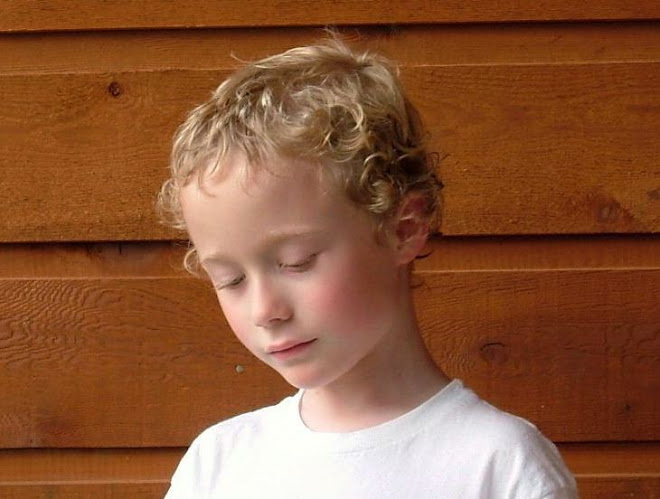
Ed Doney Reporting , KFOR
March 9, 2010
OKLAHOMA CITY -- A bill that would require insurance companies to cover treatment for children with autism has cleared the House of Representatives in Missouri. However, the fight continues over similar legislation in Oklahoma, called "Nick's Law." The father of 12-year-old Nick Rohde, for whom the proposed law was named, wants Oklahoma to join surrounding states on the issue.
Wayne Rohde spends thousands of dollars every month for Nick's autism behavioral therapy, which is not covered by insurance and yet Nick is still unable to verbally communicate with his dad.
Wayne has unsuccessfully tried to get lawmakers to pass Nick's Law and is amazed at how Oklahoma is surrounded by states that do cover the disease like Colorado, New Mexico, Texas and Louisiana.
As Missouri inches closer to providing autism coverage, Wayne says that 65 percent of Oklahomans are on his side.
"So we know we're on the right track. This is the right thing to do," he says. "Unfortunately, our State Capitol is not listening to the people of Oklahoma."
Representative Mike Brown (D, District 4) has authored House Joint Resolution 1068, which would "refer (the issue) to the people for their approval" on the November ballot.
He says it's currently being held up in a rules committee.
Brown was disappointed Nick's Law was killed last year in the Economic Development and Financial Services Committee, which means it won't be heard again until 2011.
"You can't just turn your head, stick your head in the sand and say it's going to go away," Brown says.
He points to 15 other states that have already passed autism coverage legislation that, he says, has not significantly raised insurance premiums.
"Will there be slight (cost) increases? My gosh, there's astronomical increases every year in health care, with no reasons behind it," Brown says.
Representative Dan Sullivan (R, District 71) is Chairman of the committee that killed Nick's Law, last year.
"We see a movement in the market without government intervention that's taking care of these situations and moving in the right direction," he says.
Sullivan points out that Blue Cross and Blue Shield of Oklahoma is now offering autism coverage on their own; he wants other insurance companies to follow their lead, without an expensive government mandate.
If they don't follow suit?
"It would certainly cause us to go back to these other carriers and say, 'why aren't you doing this? Give us a reason why you're not doing this?'" Sullivan says. "We would rather have people do it in their own course of business rather than forcing and mandating them to do that."
Blue Cross and Blue Shield of Oklahoma released a statement Tuesday saying "(We) will provide a clinically reasonable benefit that doesn't unduly create a price impact on small employer groups and affect their ability to provide health care coverage to their employees. This action allows us to provide a benefit for proven therapeutic services while research continues to identify effective treatments or medical solutions for children with autism."
Wayne Rohde is disappointed Blue Cross and Blue Shield of Oklahoma's autism policy does not cover behavioral therapy, which he says is the most important and most expensive treatment for children.
"We're creating a bigger problem down the road in the next few years," he says, "where the taxpayers will be on the hook to provide long-term care for these kids as they become adults."
Copyright © 2010, KFOR-TV
http://www.kfor.com/news/local/kfor-news-autism-bill-nicks-law-story,0,2313781.story
Saturday, March 13, 2010


Saturday, March 6, 2010
Tuesday, February 9, 2010
Lawmakers plan health, economic issues for session
Tahleguah Daily Press
By TEDDYE SNELL
Press Staff Writer
“It’s important that we get Nick’s Law to a vote of the people,” said Brown.
Brown is also spearheading HB 2902, which would provide insurance coverage to developmentally disabled dependents for a longer period of time. “This would allow parents who buy insurance coverage for their disabled children to extend the age of coverage to 25,” said Brown. “If it passes, it would be effective Nov. 1 of this year.”
Click here to read the entire article.
Sunday, February 7, 2010
The Oklahoman Editorial Feb 7, 2010
Autism studies bolster argument to act slowly
OUR VIEWS Prevalence rates vary widely
The Oklahoman Editorial
Published: February 7, 2010
AN insurance coverage mandate for autism therapy was a highlight of Gov. Brad Henry’s 2009 State of the State address. The issue didn’t make the highlight reel in Henry’s 2010 speech. It was never mentioned.
Last year Henry joined legislative Democrats in pushing for the mandate, which supporters say would carry a minimal cost and opponents say would be quite expensive.
One mandate bill was killed last year and that bill can’t be considered this session. The mandate has slipped from attention either for practical reasons — Republican resistance is too strong and the GOP has the majority — or for fiscal reasons: This isn’t a good time to place a financial burden on the insured, including state employees.
This is a good time to ask hard questions about the diagnosis for autism. One day after Henry’s speech, The Wall Street Journal compared two recent studies on the prevalence of autism. The studies agree on some points and disagree on others, but the overarching conclusion is that no one really knows why the prevalence rate varies so widely among locales and from one time period to the next.
The Centers for Disease Control and Prevention puts the national rate for autism spectrum disorder in 2006 at one in 110 American 8-year-olds. That’s up 57 percent from 2002. Why? Is it because more children have autism or because of changing definitions of who has it and who doesn’t?
Columbia University researchers found that the prevalence rate varies greatly within Los Angeles and environs, with higher rates in Beverly Hills than most areas. Why? No one knows.
The theory that early childhood immunizations are responsible for an autism spike is losing credibility. Researchers have struggled in vain to find solid evidence that would prove the theory.
One study says prevalence is greater among the children of highly educated parents. Another study discounts the influence of education. Children born in northwest Los Angeles are four times as likely to be diagnosed with autism as children in any other part of California. Why? No one knows.
Parents of children with an autism diagnosis have made passionate appeals for the coverage mandate. Their emotional arguments are tough to resist, yet the studies cited above offer more reason to urge caution on a mandate that would likely never go away and that would cost the insured ever more money if the diagnosis rate continues to soar.
As awareness builds of autism, more parents are likely to look for signs of trouble and seek a diagnosis. That in turn will likely drive the prevalence rate up. Jon Bai, a federal government epidemiologist, calls the increased rate "a perplexing and urgent concern.”
The pro-mandate side may yet win the argument because the number of autism-diagnosed children is growing so quickly — and so inexplicably.
Read more: http://www.newsok.com/autism-studies-bolster-argument-to-act-slowly/article/3437471?custom_click=headlines_widget#ixzz0etMj1SCJ
Legislation would help the 14,000 children with autism in Virginia
February 7, 2010
Once again, the General Assembly is convening in Richmond, and the tasks and challenges they face are not getting any easier.
Our budget has a large shortfall, our economy is in the tank, and let's not talk about Virginia's roads, bridges and tunnels.
Wouldn't it be great if we could fix some of these issues in a cost-effective manner and save the state and taxpayers money? Well, we haven't found a way to fix the roads or the economy, but we have found a way to fix our autism crisis.
Our autism crisis at present affects more than 14,000 children in Virginia.
We continue to work with our legislators to gain assistance for the families and children with autism by asking that insurance companies cover the cost of medically prescribed services for our children.
The House Labor and Commerce Subcommittee last Tuesday reached a 4-to-4 deadlock on HB303, a bill championed By Del. John Obannon.
The Senate Labor and Commerce committee will vote on SB464 this coming Monday. It is a similar bill championed by Sen. Janet Howell.
Both autism bills are modeled after bills that were enacted in Texas and Pennsylvania in the past few years.
These states have found they can provide the medically prescribed services to their children and create savings of between $187,000 and $220,000 per child in special-education costs over a three-year period. In Virginia the savings are estimated at $167,000 per child. With 14,000 children, that equates to $2.3 billion in savings.
How can this happen? Well, first understand that our public schools are tasked with providing a free and appropriate education for all children in Virginia.
It's a federal law that actually sounds better than it is.
Defining appropriate has been and continues to be an issue. What's appropriate for a child with autism is very different than what is appropriate for a child without a neuro-developmental disorder.
It's not that we have poor-quality public schools in Virginia; we have great schools, teachers and administrators.
However, if our U.S. Surgeon General and the American Pediatric Association define Applied Behavioral Analysis (ABA) as the best-practice therapy for children with autism, and our schools are not trained, certified or staffed to provide this, guess what happens?
The education is free (well, not free — we do pay taxes); however, it may not be appropriate.
Having an insurance company pick up its share of what is prescribed by a medical doctor solves many problems.
First, our kids with autism get the help they need. Second, our schools are better able to teach the kids they are trained to assist. A child with autism needs both medical and educational therapies and services to get better.
We all know there are no free rides (again, think roads, bridges and tunnels,) so here's the catch. In order to have this occur, insurance premiums are forecasted to increase 0.4 tenths of 1 percent.
That calculates to a projected $1.26 per month per policy — or $15.10 per year.
As an additional benefit to our kids, taxpayers and society, 50 percent of the kids who receive ABA services will no longer need state assistance to live productive lives (estimated at $3.2 million per child over the course of their life). Parents and family members can return to the work force and focus on earning a living, saving for the future and providing for their other children.
So where does this leave us?
It leaves us with a bill that our senators and delegates should no longer postpone. The price of inaction is more than Virginia can afford. Please call your representatives and ask them to support this legislation. The families of children with autism in Virginia thank you.
Llobell is a Virginia Beach resident and the proud grandparent of a 5-year-old child with autism.
http://www.dailypress.com/news/opinion/dp-op_autism_0207feb07,0,5997236.story
Wednesday, January 27, 2010
Leap Tall Buildings?
Printed from the Urban Tulsa Weekly website: http://www.urbantulsa.com
POSTED ON JANUARY 27, 2010:
Look, up at the capitol--is it Superman or Clark Kent?
By Arnold Hamilton
If House Speaker-designate Kris Steele isn't the most anxious guy at the state Capitol these days, he should be.
The Shawnee Republican is the GOP majority's choice to grab hold of the gavel for the 2011 session, succeeding current Speaker Chris Benge, who is being forced from office by term limits.
The problem is, Steele's yearlong ascension to power unfolds just as the House Republican caucus is showing signs of morphing into the political equivalent of a hornet's nest.
The very public dispute between Benge and Rep. David Dank of Oklahoma City over Dank's proposed property tax cap began escalating less than a fortnight before the session opens Feb. 1, threatening to fracture the GOP coalition.
In fact, Dank demanded that Benge "step up" and support the tax plan or "step down and let someone else lead the House." Benge quickly fired back, accusing Dank of "political grandstanding at its worst."
In the middle sits Steele, a genial, bespectacled 36-year-old Methodist minister whose ascension to power could be short-circuited if he is unable to help preserve caucus harmony and if notions of a palace coup take root.
Steele's position is especially tricky because he currently serves as speaker pro tempore--the House's No. 2 position. This isn't a mostly ceremonial job like lieutenant governor or vice president. The pro tem actually sits in the speaker's chair every day, wielding power over who speaks and who doesn't--and for how long. He also is routinely called upon to interpret murky, arcane House rules, a power all but certain to produce bruised egos and short tempers.
Not surprisingly, the speaker pro tem is rarely the most popular guy in the House Chamber--and on occasion might well be the most despised.
Steele glided fairly through his four terms as a state representative, winning praise from both his GOP colleagues and from Democrats as a workhorse, not a show horse. His efforts on behalf of children, low-income Oklahomans and seniors won him numerous awards and accolades.
As he rose into leadership, however, Steele made compromises that turned off staunch allies and created more than a few enemies.
One of his biggest mistakes, in my view, was throwing families with autistic children under the bus this past session. Steele had been working closely with those families for several years to require insurance companies in Oklahoma to cover autism--a proposal known as Nick's Law.
As Steele well knows, autism is a ticking time bomb for state taxpayers--early, sustained treatment is less costly and can help sufferers lead more normal, more productive lives; those who go without help often need expensive, lifelong care, typically in institutional settings.
Unfortunately, big insurance is a powerful force these days at the Capitol, perhaps even the most influential. With designs on the speakership, Steele jettisoned the common-sense proposal--which was killed in committee--and instead pursued legislation designed to increase the number of doctors trained to diagnose and treat autism.
Question: What good does it do if rank-and-file Oklahomans can't afford to be diagnosed or treated?
What's worse, Steele argued it was the best lawmakers could do. Baloney. It was the Insurance Industry Profits Protection Act of 2009, pure and simple. It's a shell game, shifting costs from insurance companies (which would cover treatment for children) to taxpayers (who would pay for much costlier adult care).
Credible studies show mandating autism coverage has no appreciable affect on premiums. In other words, it doesn't hurt insurance company profits. But big insurance doesn't want the Legislature to start approving any more mandates--none have been required since Republicans gained a House majority in 2004. The last mandate? Mammograms. Can you imagine where we'd be if women weren't encouraged--and insurance didn't cover--the annual exams?
Similarly, the dust-up over property taxes is the result of another case of legislative cost-shifting.
Dank, an affable 71-year-old grandfather and former newspaper publisher, wants to cap annual property tax increases at three percent and freeze property tax rates for seniors over 65, many of whom are on fixed incomes. Seems reasonable.
The problem is, public schools and other essential government services rely heavily on property taxes. Dank's proposal would put a serious financial crimp in those long-term services, unless lawmakers pony up additional dollars.
That, however, would require legislators to either make significant cuts in other government services or raise taxes to offset the loss, neither of which is palatable politically. They would prefer to keep the status quo--meaning that property taxes double every 13 years in Oklahoma--than be put in the position of having to answer to the voters about spending priorities or raising taxes.
It's an issue that's not going away. Dank has made that clear. And he has more than a few allies in the Legislature.
Many of the newer House members have more in common with the Tea Party activists than with the corporatists who run the House as a wholly owned subsidiary of the State Chamber of Commerce.
They might be registered Republicans, and they may share much of what has become the GOP worldview--especially when it comes to religion and knocking down the wall separating church and state--but the reality is that they identify less with their party and more with ideology.
They don't play by the old rules of party discipline that allow disagreements behind closed doors but demand lock-step unity in public.
This brings us back to Steele's tricky position. House Republicans may have decided by acclamation last fall that he would be speaker-in-waiting, but there's nothing to prevent unhappy--or ambitious--members from staging a coup before he can grab hold of the gavel.
After all, he must first survive what could well be a raucous, even angry session for lawmakers dealing with a revenue crisis that will slash state spending from $7.1 billion as recently as 2008 to only $5.3 billion available next year. Further, the makeup of the House will change in the November elections--some current members who supported Steele for speaker won't be around any longer, for example, because of term limits. The newcomers might prefer a different candidate.
If Steele, Benge and other House Republican leaders can't figure out a way to manage the personalities and issues, and if the House ends up in open revolt this session, it could end up costing Steele dearly.
-- Arnold Hamilton is editor of The Oklahoma Observer; www.okobserver.net
URL for this story: http://www.urbantulsa.comhttp://www.urbantulsa.com/gyrobase/Content?oid=oid%3A29121
Wednesday, January 20, 2010
Autism Insurance Hearing: Families Hoping for Help, Insurers Question Mandate
By KSPR News
Story Created: Jan 19, 2010
JEFFERSON CITY, Mo. (AP) - A big monetary difference remains
between insurers and health care advocates over Missouri
legislation addressing treatment for autistic children.
House and Senate committees each heard testimony Tuesday on
bills seeking to make Missouri the 16th state to enact an autism
insurance mandate.
Advocates back a proposal that would require insurers to
annually cover up to $72,000 of a therapy known as "applied
behavioral analysis" for people up to age 21.
But insurance company lobbyists say that is to costly and too
long. An executive for Blue Cross and Blue Shield of Kansas City
suggested an alternative of providing up to $32,000 of coverage
annually for children through age 7, with lesser coverage for older
children.
A spokeswoman for one of the bill’s sponsors, Senator Scott Rupp, R-Wentzville, says lawmakers will likely vote within the next two weeks. The Small Business, Insurance and Industry Committee meets every Tuesday.
Click on our video report to hear from Ozarks families who say ABA is proven to be successful yet too costly without coverage for many parents.
(Copyright 2010 by The Associated Press. All Rights Reserved.)
Subscribe to:
Posts (Atom)

 Posts


