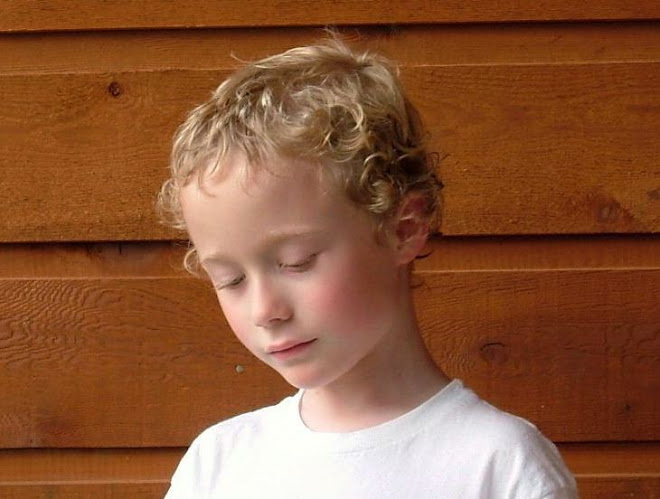
Previously, insurers could deny coverage for unrelated treatments.
By SUSAN HYLTON World Staff Writer
4/24/2010
Advocates for children with autism say that a bill signed into law Friday by Gov. Brad Henry is a good first step toward parity in health coverage for the disorder.
The legislation, added to Senate Bill 2045, requires health insurers to cover the same illnesses for autistic children as they do for children without the condition. The law came about after parents reported that medical coverage was denied for services having nothing to do with autism, such as playground injuries.
"This is a bill to stop any restrictions or discrimination against individuals with autism from medical or surgical procedures that are currently covered," said Wayne Rohde, whose 12-year-old son Nick was diagnosed with severe regressive autism when he was 4.
"The insurance companies needed to stop this discrimination. The leadership of both parties decided it wasn't right."
Rohde said insurance companies were limiting coverage for occupational and speech therapy for autistic children but not imposing those limitations for children without autism seeking the same treatment.
In one case, an autistic child was denied coverage for asthma treatments while an asthmatic child without autism was covered, Rohde said.
Christina Newendorp, development director at the Autism Center of Tulsa, who has two sons with autism, said parents had to decide whether they really wanted a diagnosis that could be used as a reason to reject medical claims.
Newendorp said the law won't require all insurance companies to cover the most effective treatments for autism, known as applied behavioral analysis, which can cost $2,000 to $4,000 a month.
That coverage was part of the 2009 failed legislation known as Nick's Law, named for Rohde's son.
"It doesn't address the larger issue of insurers out there who don't cover (autism) as a medical condition whatsoever," she said. "There's no logical reason for insurance companies not to consider autism a medical disorder. We're surrounded by states taking action on this issue. Oklahoma is dragging its feet."
With an estimated 1 in 150 children being diagnosed with an autism spectrum disorder, there could be a tidal wave of disabled adults in the future if nothing is done, Newendorp said.
"If we take action now, we can help turn these children's lives around so they can become independent adults," she said.
Rohde said that, with treatment, Nick moved from a severe form of autism to the middle of the spectrum.
He is still nonverbal, but he now recognizes words, feeds and dresses himself and is not completely dependent on others for his care.
He also plays with his twin brother, Austin, who does not have autism, his father said.
"Austin is very proud and introduces him to the neighborhood kids," Rohde said. "Austin knows how to communicate with him."
Click here to read the article.
Showing posts with label Gov Henry. Show all posts
Showing posts with label Gov Henry. Show all posts
Saturday, April 24, 2010


Sunday, February 7, 2010
The Oklahoman Editorial Feb 7, 2010
Autism studies bolster argument to act slowly
OUR VIEWS Prevalence rates vary widely
The Oklahoman Editorial
Published: February 7, 2010
AN insurance coverage mandate for autism therapy was a highlight of Gov. Brad Henry’s 2009 State of the State address. The issue didn’t make the highlight reel in Henry’s 2010 speech. It was never mentioned.
Last year Henry joined legislative Democrats in pushing for the mandate, which supporters say would carry a minimal cost and opponents say would be quite expensive.
One mandate bill was killed last year and that bill can’t be considered this session. The mandate has slipped from attention either for practical reasons — Republican resistance is too strong and the GOP has the majority — or for fiscal reasons: This isn’t a good time to place a financial burden on the insured, including state employees.
This is a good time to ask hard questions about the diagnosis for autism. One day after Henry’s speech, The Wall Street Journal compared two recent studies on the prevalence of autism. The studies agree on some points and disagree on others, but the overarching conclusion is that no one really knows why the prevalence rate varies so widely among locales and from one time period to the next.
The Centers for Disease Control and Prevention puts the national rate for autism spectrum disorder in 2006 at one in 110 American 8-year-olds. That’s up 57 percent from 2002. Why? Is it because more children have autism or because of changing definitions of who has it and who doesn’t?
Columbia University researchers found that the prevalence rate varies greatly within Los Angeles and environs, with higher rates in Beverly Hills than most areas. Why? No one knows.
The theory that early childhood immunizations are responsible for an autism spike is losing credibility. Researchers have struggled in vain to find solid evidence that would prove the theory.
One study says prevalence is greater among the children of highly educated parents. Another study discounts the influence of education. Children born in northwest Los Angeles are four times as likely to be diagnosed with autism as children in any other part of California. Why? No one knows.
Parents of children with an autism diagnosis have made passionate appeals for the coverage mandate. Their emotional arguments are tough to resist, yet the studies cited above offer more reason to urge caution on a mandate that would likely never go away and that would cost the insured ever more money if the diagnosis rate continues to soar.
As awareness builds of autism, more parents are likely to look for signs of trouble and seek a diagnosis. That in turn will likely drive the prevalence rate up. Jon Bai, a federal government epidemiologist, calls the increased rate "a perplexing and urgent concern.”
The pro-mandate side may yet win the argument because the number of autism-diagnosed children is growing so quickly — and so inexplicably.
Read more: http://www.newsok.com/autism-studies-bolster-argument-to-act-slowly/article/3437471?custom_click=headlines_widget#ixzz0etMj1SCJ
Sunday, May 17, 2009
Autism specialists bill only a ‘small step,’ Democrats say
Edmond Sun
RAY MARTIN
State Capitol News Service
OKLAHOMA CITY May 14, 2009 02:31 pm
— The Oklahoma Legislature remains divided on the issue of assisting families with autistic children, despite enactment of a new law designed to make services more available and affordable.
Even Democratic Gov. Brad Henry, who signed the law into effect May 4, expressed concern that the measure was only “one very small step” in the effort to help Oklahoma families dealing with autism.
Senate Bill 135, authored by Sen. Ron Justice, R-Chickasha, proposes to increase autism services and provide funding to train in-state specialists so families won’t have to travel out-of-state to obtain help.
The bill was one of several introduced this year in an attempt to increase care for autistic children. Like the other bills, SB 135 has caused much controversy between Democrats and Republicans.
Autism is a brain development disorder characterized by impaired social interaction and communication. Experts have testified that it afflicts as many as 1 out of 150 children, yet one study showed Oklahoma had only 10 autism treatment specialists.
Eighteen states have enacted some form of coverage mandate to make insurance companies help pay the cost of autism treatment. But the Oklahoma Legislature has balked at doing so, citing concerns that requiring coverage would increase health insurance premiums for everyone.
SB 135 does not force Oklahoma insurers to cover autism. Justice and most of his fellow Republicans insist it will provide relief for the families of autistic children by increasing the availability of in-state services. House and Senate Democrats generally disagree, claiming families will still be unable to afford services even if there are more specialists available to provide them.
In February, the Republican-controlled House Economic Development and Financial Services Committee voted down House Bill 1312, also known as “Nick’s Law,” which would have required insurance providers to cover autism treatment. The panel also voted to prohibit the Legislature from proposing similar measures until 2011.
Democrats offered a compromise — to put autism coverage in high-risk insurance pools as a last resort for families who can’t afford the coverage elsewhere.
Republicans again declined, and instead went forward with SB 135 and its House version, HB 2027. Subsequent votes tended to stick to party lines.
Henry and other Democrats generally don’t oppose the legislation, which they say is better than nothing. But they contend that attempts to solve the problem in reverse, by increasing services but not helping families pay for them.
“It’s all in the wrong order. It doesn’t provide any relief for families,” said Sen. Jay Paul Gumm (D-Durant), who tried unsuccessfully to amend SB 135 to include high-risk insurance benefits after Nick’s Law was shot down. “The glimmer of good in it is that it gives state recognition to apply state licensing therapies and encourages the training of therapists. But it creates a brain drain, because we’re going to train a bunch of therapists, and they’re going to move out of state since there isn’t a market here, and people won’t be able to afford the services.”
Democrats say the new specialists will be insignificant if autism is not added to high-risk insurance policies and families can’t afford the services. Some claim Republicans won’t budge on the issue because of financial ties and campaign commitments to insurance companies. Republicans dismiss such accusations.
Justice said the bill is actually the first step toward relief, since experts would advise how to best create affordable service and how to keep insurance costs from skyrocketing.
“To me, it’s the foundation,” Justice said. “If we don’t have the right experts who understand them (autistic people), we might waste all kinds of money. We have to know what we’re doing before we start spending.”
Nick’s Law was endorsed in the Senate four times last year, but was denied a hearing in the House.
Rep. Kris Steele, R-Shawnee, the House sponsor of HB 2027, said he agrees with other Republicans who oppose mandated coverage because it could raise insurance premiums for everyone, making health coverage less affordable. But Gumm said such concerns are unfounded, based on the financial impact of mandated coverage in other states.
“Why does California have cheaper premiums than we do when they have mandated coverage?” Gumm asked after a floor debate about autism coverage on May 6. “The evidence just is not there to support that claim.”
Currently, 18 states require mandated medical coverage for autistic children. More than 30 are considering measures to add the insurance requirement. Gumm and Henry have both pledged to keep fighting for passage of Nick’s Law.
When Henry signed SB 135, he challenged lawmakers to expand services to children with autism.
“To provide comprehensive assistance to the families of children with autism, we must also approve legislation extending insurance coverage to treatment of this developmental disability,” Henry said.
Said Gumm: “I will never stop fighting for these kids and their families. They’re too precious. The families are struggling too hard.”
RAY MARTIN is a senior journalism student at the University of Oklahoma who is writing a weekly legislative report for the Oklahoma Press Association.
Copyright © 1999-2008 cnhi, inc.
Tuesday, May 5, 2009
Autism Bill Only “Relieves Political Pressure” – Senator Gumm

The State of Oklahoma
OFFICE OF SENATOR JAY PAUL GUMM
Atoka, Bryan, Coal, Johnston & Marshall Counties
May 5, 2009
FOR IMMEDIATE RELEASE
Contact: Senator Jay Paul Gumm
State Capitol: (405) 521-5586
Durant Office: (580) 924-2221
Mobile: (580) 920-6990
Autism Bill Only “Relieves Political Pressure” – Senator Gumm
OKLAHOMA CITY – Following is a statement by Senator Jay Paul Gumm, D-Durant, author of “Nick’s Law” relating to the enactment of Senate Bill 135:
“Sadly, this bill will do nothing to relieve the pressure on families struggling to care for children with autism. The measure was designed to relieve political pressure on legislators who refuse to even consider ‘Nick’s Law,’ which would require health insurance to cover diagnosis and treatment of autism.
“There is nothing wrong with this bill, just like there is nothing wrong with a pack of shingles at a construction site. If you try to put the shingles on before you pour the foundation, you are doomed to failure. As Governor Henry wisely noted when he signed the bill, the foundation is insurance coverage of autism. Absent that, Senate Bill 135 is doomed to failure.
“The therapists that will be trained under this bill will be unable to make a living in Oklahoma because families still will be unable to afford the applied behavioral analysis therapies they offer – just as they are today. The reason is that there is nothing in Senate Bill 135 that would even remotely help families bear the cost of this critical treatment.
“More than one child per day in Oklahoma is being diagnosed with autism. That means more than one child per day is being lost because they are ‘aging out,’ getting too old for the therapies to reach. Again, this bill does nothing to help those children to day.
“For anyone to suggest that ‘relief is on the way,’ is simply not consistent with the bill. Statements like that are irresponsible and provide only the falsest of hopes to families who are begging lawmakers for real help. Families deserve better than the sham being perpetrated on them by legislators who have neither the courage nor willingness to support ‘Nick’s Law.’”
Monday, May 4, 2009
Gov. Henry signs autism services bill

The Associated Press
Published: May 4, 2009
click here to post on-line comments.
Gov. Brad Henry has signed legislation designed to increase the number of therapists who provide services to autistic children.
But Henry said Monday the measure is just a small step in the effort to help affected Oklahoma families. He urged lawmakers to pass legislation to mandate insurance coverage for the treatment of autism.
The bill calls for enactment of a licensing process for national board certified behavior analysts and enhancement of existing state programs that would train doctors to diagnose and treat autism.
But the governor says some people question whether it will actually produce significant new services if insurance doesn't cover the cost of treatment and parents can't afford to pay the bill.
Republican legislative leaders oppose insurance mandates and say they drive up the cost of health insurance.
Thursday, April 30, 2009
Gov. Brad Henry vetoes insurance bill
Capitol Bureau
Published: April 30, 2009
Gov. Brad Henry on Thursday vetoed a bill that would limit when legislation dealing with the insurance industry could be heard.
House Bill 1975 said insurance legislation could only be introduced in odd-numbered years and approved in even-numbered years. The bill would have also required a 75 percent super-majority vote to do away with the mandate in the case of an emergency.
In the message that accompanied Henry's veto, he said the bill would have unreasonably "tied the hands of state policy makers on a very important issue." “This would empower a small minority of legislators to thwart legitimate state efforts to address a pressing public policy issue and ensure that the restriction would rarely, if ever, be lifted," Henry said.
Henry also questioned why HB 1975 restrictions were only applied to a single issue area, saying it raised legitimate concerns regarding why only one subject would be singled out for special treatment.
“Oklahoma and its citizens are better served when policy makers are allowed the freedom to address any pressing issue in the Legislature without the hindrance of arbitrary restrictions,” Henry said.
Statement from Democratic Leader Charlie Laster on Governor Henry’s Veto of HB 1975
Oklahoma State Senate
April 30, 2009
For Immediate Release
Contact: Amber England, Democratic Communications Director
Oklahoma State Senate
Statement from Democratic Leader Charlie Laster on Governor Henry’s Veto of HB 1975;
Says the Bill did Nothing but Protect the Powerful Insurance Industry
“We knew in January when Senate Republicans changed the rules to include special protection for one specific industry—the powerful insurance industry—we would be faced with a barrage of bills that would make it harder to make health care more affordable for Oklahoma families.
“House Bill 1975 is just one of many bills Republicans have shoved through the legislative process that would provide cover for insurance companies on the backs of Oklahoma families who are desperate to see the insurance coverage they pay for work for them.
“We are grateful to Governor Henry for vetoing this bill that did nothing more than make it harder for the Oklahoma Legislature to bring true insurance reform to this state.”
Friday, February 6, 2009
Gov Henry Urges Lawmakers to Reconsider Debate Ban on Autism Bill
Henry Urges Lawmakers To Reconsider Debate Ban On Autism Bill
posted 02/06/09
Oklahoma City - Gov. Brad Henry wants lawmakers to reconsider banning debate on mandating insurance coverage for autism.
Henry's comments today come two days after the House Economic Development and Financial Services Committee voted along party lines against House Bill 1312 by Tahlequah Rep. Mike Brown.
The action effectively keeps the issue from being revisited for two years. The fate of a similar measure in the Senate is uncertain.
Henry says there are good people on both sides of the issue who have different opinions. But he says the way to resolve those differences isn't with a two-year moratorium on any discussion.
Critics of the measure say it would drive up the costs for insurance coverage.
In his State of the State address Monday, Henry urged lawmakers to approve insurance coverage for autistic children.
Wednesday, February 4, 2009
Canned heat: Autism mandate put on the back burner
The Oklahoman Editorial Published: February 5, 2009
The Oklahoman Editorial
Published: February 5, 2009
Gov. Brad Henry’s State of the State speech offered its biggest applause lines as the biscuits in a sandwich whose sausage was the autism mandate. This was a free Grand Slam breakfast for Henry because he knew a Republican Legislature was unlikely to send him a mandate bill.
A House committee wasted no time defeating the mandate and declaring it dead for the next two years. The early vote was smart because it dealt quickly with a sizzling issue rather than let it stay on the griddle for week after week.
That’s what happened last year. Mandate supporters — mostly parents of autistic children and therefore unlikely to be objective — aren’t finished. Sen. Jay Paul Gumm, D-Durant, the short-order cook who served up this issue in 2008, said the GOP stance is a recipe for a political scorching.
"I think that’s a serious miscalculation on their part,” Gumm declared. "These families aren’t going away.”
If taking a rational view of the mandate is politically unappetizing, then why did Republicans increase their strength in the Legislature in 2008?
If the autism mandate is worth having, isn’t it also worth having a rational debate in which the mandate’s costs are thoroughly digested? And spare us the empty-calorie argument about insurance company greed.
Gumm wants to pay the tip but let the rest of us pay the tab. His figures on the mandate’s cost vary widely from numbers offered by Republicans.
Let’s keep autism on the menu. But let’s not order a supersized mandate until we get more nutritional data.
Monday, February 2, 2009
Gov. Henry Opens Legislative Session
Posted: Feb 2, 2009
Gov. Henry Opens Legislative Session
Enlarge
Governor Brad Henry opened the 2009 legislative session Monday with his State of the State address.
Henry Calls for Thrift and Sacrifice
By Alex Cameron, NEWS 9
OKLAHOMA CITY -- Governor Brad Henry opened the legislative session Monday by calling on lawmakers to make difficult choices in these difficult times.
Specifically, the Governor said they need to work together to overcome an estimated $600 million revenue shortfall without giving ground in education, transportation and public safety.
The State of the State is the Governor's annual opportunity to publicly lay out his agenda, his priorities for the session and, with money so tight this year, it's really no surprise that his agenda is fairly lean, and that his top priority is just coming up with a budget.
Read the Full Text of the Governor's Speech.
"State agencies must tighten their budgets, some projects must be put on hold," Henry said.
The Governor didn't specify in his speech which projects he thinks should be put on hold, but he made it clear which ones he thinks should not. He called for continued support of the Oklahoma Bioenergy Center, further support for research by creating a permanent funding source for the EDGE endowment, expansion of Insure Oklahoma, to get health insurance for more workers. He asked for support of a bill to provide community mentors to at-risk high school students, a bill to expand early in-person voting and a bill to require insurance companies cover treatment for autistic children, the so-called Nick's Law.
"Too many of our families face the daunting task of raising autistic children with little or no help," Henry said. "That must change."
The line brought Democrats to their feet. Republicans said such a mandate will only increase insurance premiums and increase the state's number of uninsured.
"The growing number of autistic children is a concern to all of us, but the growing number including some estimates as high as $600,000 uninsured in our state is also a great concern to many of us," Sen. Glen Coffee (R) Senate President Pro Tem said.
Overall, Coffee commended the Governor on a speech that he said was upbeat and forward-thinking. He said they have a lot of common ground, although he said he's disappointed the Governor made no mention of the need for tort reform this session.
Governor Henry concluded his speech by calling on lawmakers to set aside partisan squabbles this session, work together and set Oklahoma on the right course for the future.
Oklahoma Gov. Brad Henry extols Legislature to cuts costs, resist tapping into Rainy Day fund
By Michael McNutt - Capitol Bureau
Published: February 2, 2009
Addressing the first-ever Republican-controlled Legislature, Gov. Brad Henry told lawmakers today they must exercise thrift and sacrifice to tackle a $600 million budget shortfall.
The governor, in a speech to kick off the first session of the 52nd Legislature, said his budget proposal calls for “precise, surgical cuts while protecting vital state functions such as education, health care, transportation and public safety.”
“As Oklahoma families take a hard look at their own expenses and cut where they can, we must do the same,” Henry said in prepared remarks released in advance.
“State agencies must tighten their budgets. Some projects must be put on hold.”
He’s proposing state purchasing reforms and consolidating information technologies, including services the state offers online, to also tackle the shortfall.
Henry, a Democrat, spoke to a joint session of the House, controlled by Republicans since the November 2004 elections, and the Senate, which the GOP took control of for the first time ever after November’s elections.
Despite the state’s budget woes, Henry, making his seventh State of the State address, sprinkled optimism through his address and quoted Oklahoma favorite son Will Rogers and Mahatma Gandhi, the historic political and spiritual leader of India.
Borrowing Rogers’ line that if you don’t like Oklahoma’s weather to just wait five minutes because it will change, the economy also is uncertain, Henry said.
“Today’s showers could be tomorrow’s tempest,” the governor said, “and so we must resist the urge to raid the Rainy Day Fund.”
The Rainy Day Fund, the state’s savings account, is full, with nearly $600 million, Henry said. Henry said legislators need to keep it in reserve because the 2011 fiscal year could be worse.
Henry, who faced a tough economic shortfall in his first year as governor in 2003, said legislators this year – just as six years ago – will be able to craft a balanced budget for the upcoming fiscal year without passing tax increases. The state then had only about $70 million in the Rainy Day Fund, and legislators spent all but $100,000 of it.
The nation’s recession, which appears to be tightening its grip on Oklahoma, shouldn’t overwhelm legislators, the governor said.
“We should also remember that the sun will shine again,” he said. “This session must be about more than simply seeing our state through a troubled today; we must also plan ahead to ensure prosperity and promise for tomorrow.”
He proposed legislators find a permanent funding source for the state’s research endowment fund, which can help produce high-paying jobs.
“Each year we fail to act put us at a greater competitive disadvantage,” Henry said. “Biotech, aerospace, renewable energies, knowledge-based industries – these are the gateways to a thriving economy in the global age.”
Henry also brought up the topic of insurance coverage for autistic children, a divisive, emotional issue last year fueled by a House committee twice refusing to let parents of autistic children speak.
He complimented the House for its proposal to increase the number of autism service providers in Oklahoma, but called on legislators to ensure all insurance companies follow the lead of Blue Cross and Blue Shield, and include autism coverage in its policies. Blue Cross and Blue Shield has said it would add benefits for autism to its coverage beginning next year.
“Too many of our families face the daunting task of raising autistic children with little or no help,” he said.
Henry, who has preached nonpartisanship throughout his administration, urged lawmakers “to shrug off the perceived slights that sometimes tarnish the business of this building.”
Gandhi noted an “‘eye for an eye’ makes the whole world blind,” the governor said. “The challenges of 2009 and beyond will require clear vision.”
Hard times, tough choices as Legislature convenes
OUR VIEWS State of the State address
The Oklahoman Editorial
Published: February 3, 2009
FISCAL turmoil is destined to be written on the bookends for Brad Henry’s time in the governor’s chair. He presided over a budget crisis in his first year in office, and the governor expects next year to be even more challenging than 2009.
The volumes held in place by the bookends of 2003 and 2010 (Henry’s final year in office) carry titles touting a string of accomplishments — establishment of the EDGE endowment, building the Rainy Day Fund, teacher pay raises, outreaches to the uninsured, income tax cuts, creation of new revenue sources.
And political failures: Lawsuit reform, permanent funding for EDGE, the Republican takeover of the Legislature, health care declines.
For his penultimate State of the State address, delivered Monday, Henry authored a sober assessment of Oklahoma’s financial condition. The title, to borrow words from his speech, could be "Deep Uncertainty.”
Henry isn’t a skilled orator, so reading his speeches is generally more pleasant than hearing them. Reading the 2009 speech, one notes the paucity of plot. With so little money to spend, and so much budget-cutting to do, the address was short on specifics, bereft of ideas for new programs. He talked of anxiety, extolled the need for "thrift and sacrifice” and appealed, as do we, for an absence of "polarizing legislation that grabs the attention of bloggers and talk radio.”
The governor expressed hope, but he didn’t make it the leading character. That role instead went to a common commitment to avoid sacrificing progress on the altar of fiscal turmoil.
Unlike many Democrats in office, Henry gets it. Just as families must cut expenses, so must government. Lower taxes mean more money in household budgets. Yet he doesn’t get it when it comes to health care mandates, which lead to higher insurance premiums.
He preceded his call for a scarcity of polarization by an insistence on the autism mandate, one of the most polarizing issues of the 2008 legislative session. Henry did express support for lower-cost policies that presumably would carry few mandates, but this was a mere blurb in his book compared with the passage on the autism mandate.
The governor’s ideas for 2009 aren’t terribly ambitious. Fiscal reality has reduced the previous pages of wish lists to a few revenue-neutral desires, more like a pamphlet than a book. Any future biographer of Henry would find little to write about from this speech, but perhaps much to say on how the governor handled himself in the fiscal crises that began and will likely end his administration.
In general, he has handled himself well, balancing the need for positivism with the necessity for pragmatism. Suggested title, from his own speech: "Difficult Times, Difficult Choices.”
Subscribe to:
Posts (Atom)

 Posts


